The government is approving the production and sale of tainted meat without public approval—or awareness.
Imagine going to a restaurant, ordering a steak and receiving a piece of cardboard. Most people would probably be pretty shocked that the chef even put the cardboard on the plate or that the waiter brought it over. This is essentially what is happening in the meatpacking industry. The top four meat production companies in the world are increasing production rates and becoming significantly wealthier. In 2001, Tyson Foods, the world’s leading producer, processor, and marketer of chicken-based products, bought IBP, the largest beef and pork production company. Marion Nestle’s research in “Resisting Food Safety” estimates this merger resulted in Tyson Foods’ control of “about 28% of the world’s beef, 25% of the chicken and 18% of the pork.” Tyson Foods and other large agricultural companies are achieving this power and financial success through corrupt practices. They raise cattle in unhealthy environments and coerce government agencies and officials through indirect bribes to allow their meat to make it onto supermarket shelves. At the heart of the meatpacking industry lies issues of political corruption perpetuated through government regulations resulting in major issues of public health.
The Food and Drug Administration (FDA) is notorious for ceding control of meat production regulations to the whims of meat industry leaders. This bias perpetuates extremely unhealthy practices by the meat industry. In 2004, there was an outbreak of mad cow disease in Canada which prompted FDA officials to propose two meat production regulations. The first was a ban on downer cows and any animal parts known to cause mad cow disease. The second was a ban on mammalian blood, poultry litter, and meat leftovers in restaurants. Seven months later the FDA implanted the first regulation. Soon after, they proposed an even stricter version of the second rule, “to remove particularly risky cow parts—’specified risk materials’ (SRMs), such as older cow brains and spinal cords—from all animal feed” However, this rule never went into effect and its proposal was simply a way for the FDA to improve their public image.
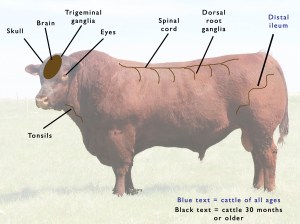
In the Consumer Reports article, “You Are What You Eat” Jean Halloran, director of the Consumer Policy Institute of Consumers Union said it best, “In what appears to be a guise of considering a bigger step, they did nothing.” The president of the American Meat Institute Foundation, James Hodges countered Halloran’s perspective in the same article: “there needs to be a risk-benefit analysis and a cost-benefit analysis… Spending millions or hundreds of millions of dollars for no practical risk-reduction benefit is not good public policy.” With all of the data right in front of us covering the presence of ruminant feed in our food, Hodges’ remarks are difficult to digest without spurring a sense of frustration. How can our food not be considered something that is worth our time and money when it quite literally has a direct impact on our health and wellbeing?
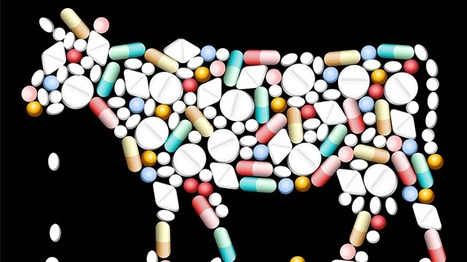
This is not the only time government agencies have allowed dangerous practices by meat production companies to fly under the radar. In recent years, the use of antibiotics in animals has increased. Growers casually mention that they “give antibiotics to whole herds or flocks as preventive measure” and it is “routine” in the industry to do so. This preventative use of antibiotics can be dangerous because it generates a gross increase in antibiotic resistant bacteria known as super bugs.
According to the Center of Disease Control and Prevention, “more than 2.8 million antibiotic-resistant infections occur in the U.S. each year, and more than 35,000 people die” due to the direct ingestion of antibiotic tainted meat by consumers
In an attempt to fight against this unhealthy practice, the FDA uncharacteristically proposed a regulation on the usage of antibiotics. However, Congress “overruled this idea under pressure from farm-state lawmakers, livestock producers, and the makers of the drugs.” This is yet another illustration of government agency corruption in the meatpacking industry resulting in significant detrimental effects to the public.

A quid pro quo strategy is often used by meat and agricultural industry leaders to elicit favorable outcomes from government officials. In 1995, an E. coli outbreak that made 700 people sick shocked the public. In response, the USDA implemented new food safety regulations. However, these regulations were met with great distaste from the meat and agriculture industry. This prompted their intervention by targeting a specific key government official, Rep. James Walsh. When he was running for office in 1996, he received over $65,000 from agricultural industry interests. He later introduced an amendment that would force the USDA “to conduct more extensive hearings, thus delaying implementation of the new food-safety system, which included testing for salmonella in ground beef.” Similar to the Consumer Reports article, this incident highlights the fatal flaw of our government—money is power. Industry leaders use their significantly deeper pockets to bully politicians into allowing strikingly terrible mass food production conditions to persist. Furthermore, Walsh’s amendment said the salmonella testing was “not the proper scientific measure to use.”
The use of ‘science’ as an obstructive piece of rhetoric is relevant in the relationship between political intervention and the meat industry. Referencing Congress’ prevention of the FDA’s strongly recommended regulation of antibiotic usage, Marion Nestle writes, “Every time the FDA attempted to restrict the use of the drugs, Congress again intervened, mainly as a result of the drug industry lobbying and the invocation of ‘science.’” The word ‘science’ and phrase ‘scientific measure’ are both used in such a way that prevents consumers from questioning the real intention of the industry leaders because consumers trust science.
Deception of statistics and science is commonplace in government regulatory agencies. In 1966 the Center of Disease Control (CDC) began a voluntary program of state surveillance on foodborne illnesses. The CDC found that “half the states were reporting no outbreaks or very few” illustrating intentional governmental deceit. The States knew that by reporting the actual population parameters of foodborne illnesses, they might be faced with stricter regulations by the federal government, resulting in a drastic drop in statewide economic output.
One major company, JBS USA is at the forefront of political corruption in the meatpacking industry with recent headlines detailing a major scandal in their Brazilian factories. Authorities investigated allegations of JBS bribing food sanitation inspectors in an attempt in increase sales “to domestic and foreign buyers of meats that might otherwise have failed to pass muster.”
Brazilian officials sent over one thousand officers to one hundred and ninety-four locations finding 40 specific incidents of food violations. The findings were exceptionally shocking. They found “acid and other chemicals” were being used to “mask the aspect of the product.” In some cases, “even cardboard paper was mixed with chicken meat to increase profits.”
In response there has been a major plunge in the economic value of JBS USA. The scandal hopefully sheds some well-deserved light on the corruption in the meatpacking industry. Furthermore, refusal from countries to trade with Brazil due to this meat scandal will most likely scare governments enough at the prospect of a lower GDP to pursue healthier alternatives and regulations.
Meat industry leaders are corrupting politicians and government agencies with bribes allowing SRMs, antibiotic resistant bacteria, E. coli, salmonella, and acidic materials to pass government food safety regulations. As more tainted meat is pushed to the public, companies like Tyson grow wealthier. This further incentivizes and increases their economic ability to corrupt more politicians in a positive feedback loop. This major failing of our current government illustrates our profound need for a checks and balances system to help regulate the regulators. At some point we are going to have to ask ourselves what our values are… Is it wealth or health?
 WRT 205 Unit 1 Assignment